What went wrong? Learning from failure in clinical trials
Sonia Gandhi's brain mapping mission accelerates

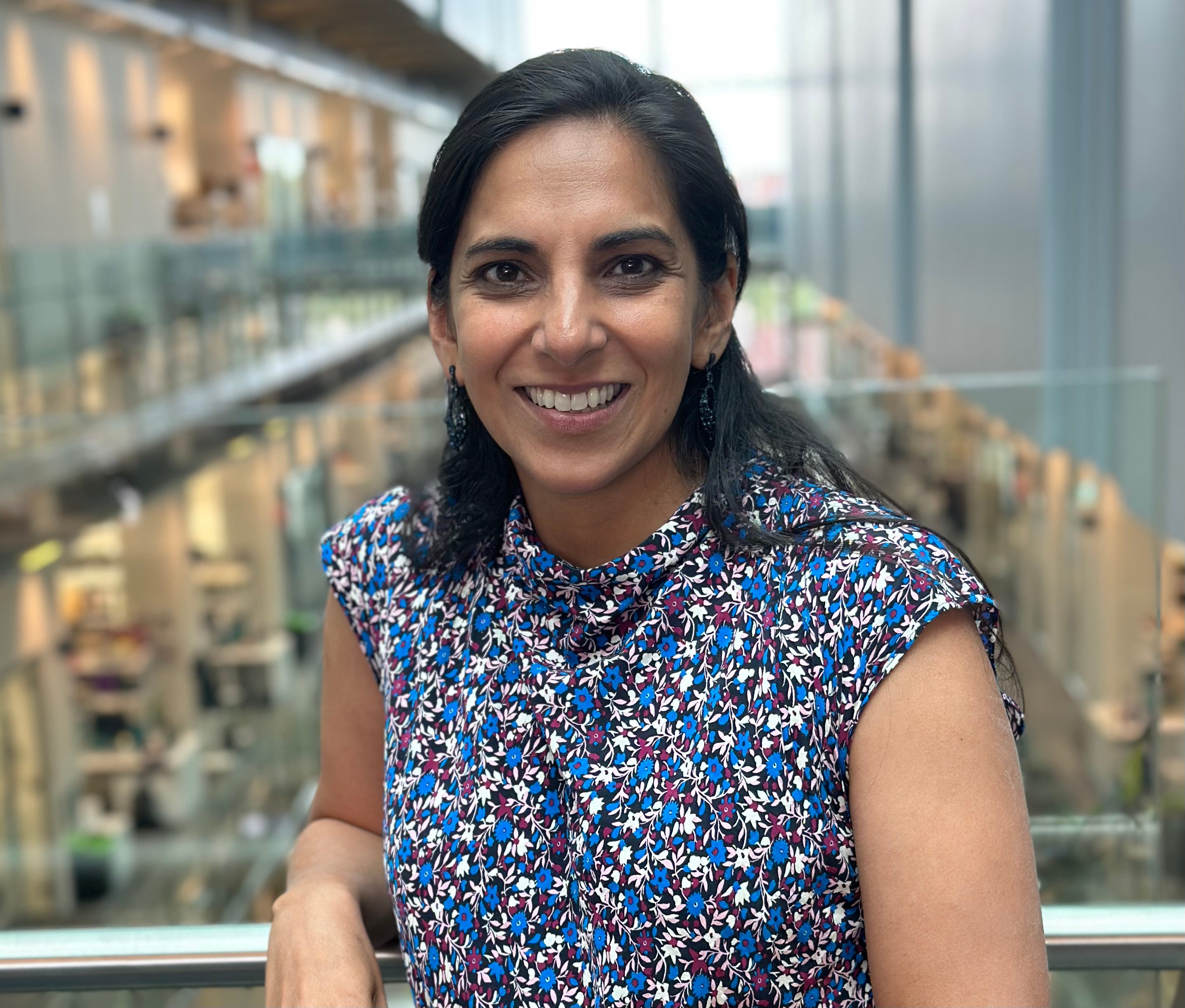
In the last few months I have interviewed some of the UK’s most brilliant scientists and doctors for a forthcoming book about the hunt for a cure for Parkinson’s and the role that AI might play in it. As an arts graduate who gave up biology at 12 I am always teetering on the edge of terror as I try to get to grips with some incredibly complex science. But fortunately most of the people I have been interviewing are brilliant communicators, none more so than the one I met this week.
About forty minutes in to my conversation with Professor Sonia Gandhi in her office at the Francis Crick Institute, I stopped and asked if she minded if I paraphrased what she had just told me. I wanted to make sure I had understood the big leap forward in decoding the Parkinson’s brain that she had outlined:
”What you’ve discovered is that these sensor cells, called microglia, are attacking a perceived problem in the brain and causing inflammation, and it’s happening at a very early stage. So the big problem in your research is a chicken and egg one - is inflammation a result of Parkinson’s or the cause of it - and this inflammation you might have thought until now was a result of another process may be the originator of the problem instead.”
She beamed and said “exactly” and I felt as relieved and proud as the boy who solves a complex algebra problem in front of the whole class. She went on to describe how much closer she and her team were getting to finding out what causes those cells to misbehave - is it a misfolded protein AlphaSynuclein, is it air pollution or should they focus more on the mitochondria, the powerhouses in cells? The current thinking is it could be all three, which means we may need more than one breakthrough drug to combat Parkinson’s.
I had visited Professor Gandhi two years before and written about her mission to map the Parkinson’s brain by using very powerful microscopes and by building a model of an individual brain cell in the lab. It felt like important work back then for if we were to find a drug to tackle the disease we first needed to understand what exactly was going wrong in the brain.
It feels even more urgent since the failure of the phase three trial of exenatide which many had been expecting to be the first disease modifying drug for Parkinson’s. But the main problem with the exenatide trial, Sonia Gandhi told me, was not that it failed but that it was not clear why it failed. “When we say it hasn’t worked, we don’t know which bit didn’t work. And that’s really sad.”
She is now working with the chief investigator of the trial Tom Foltynie to try to work out what went wrong:”If you talk to the people from the exenatide trial, many of them felt loads better,” she says.”It’s absolutely our duty, to be able to explain why it did work or why it didn’t work when patients feel better.” Among the questions to be asked, did the drug reach its target in the brain, and if so or was it being aimed at the wrong target?
Professor Gandhi is also involved in the new EJS ACT-PD mega trial, which is led by Camille Carroll and Tom Foltynie. Her job is to run a separate study of whether the several drugs that will be tested engage with their targets correctly. “So we can say, stop, don’t carry on with that drug because that target’s not the right target.”
So the discoveries being made in her lab are not just esoteric deep science, far from relevant to the current concerns of people with Parkinson’s, they will help drug developers focus their efforts more precisely.
In her continuing mission to dig deeper into the workings of the Parkinson’s brain Sonia Gandhi says AI will now play an ever greater role as scientists have to tackle ever increasing amounts of data.. I bring up the slow speed of the hunt for a cure for Parkinson’s as compared to the big advances in treating cancer and wonder whether that is because diseases of the brain are just more complex:
“I would say that just because it’s complex, it doesn’t mean it can’t be much faster, especially because discoveries are made much faster and the technologies are faster, including the AI technologies, that can now process these vast amounts of information we’re generating in our map, in everyone’s maps, and not just process it, but come up with potential targets from those data sets.”
Professor Gandhi says a key reason that the search for a breakthrough in Parkinson’s care has been so slow is that scientists had until recently given the drug developers only the sketchiest of maps to guide them. That had now changed: “I‘m sitting telling you about a whole load of new pathways discovered only in the last two years. So, actually, now there are lots of things to target, so perhaps then the disease modifying therapy search will accelerate.”
I emerged from the Francis Crick Institute’s spectacular building next to St Pancras staton, my head buzzing as I tried to process what I had heard over the past 90 minutes. But having often moaned about the slow pace of Parkinson’s science I was also immensely cheered that Sonia Gandhi appeared to have her foot firmly on the accelerator.
Let's all hope that Professor Gandhi and her colleagues throughout the world can crack it open, perhaps with an assist from AI. Thx for this hopeful post.
Encouraging!